
How do cnc systems enhance the performance of a vertical machining center?
CNC performance scales directly with the processing frequency of its controller, where 64-bit RISC processors reduce block processing time to 0.1ms. Modern systems leverage 2,000-block look-ahead buffers and thermal sensors to maintain a constant volumetric accuracy of $\pm0.005mm$ during high-speed milling. By integrating AI-driven adaptive feed control, these controllers sustain 98% spindle utilization and reduce non-cutting time by 18% compared to 2022 industry benchmarks.
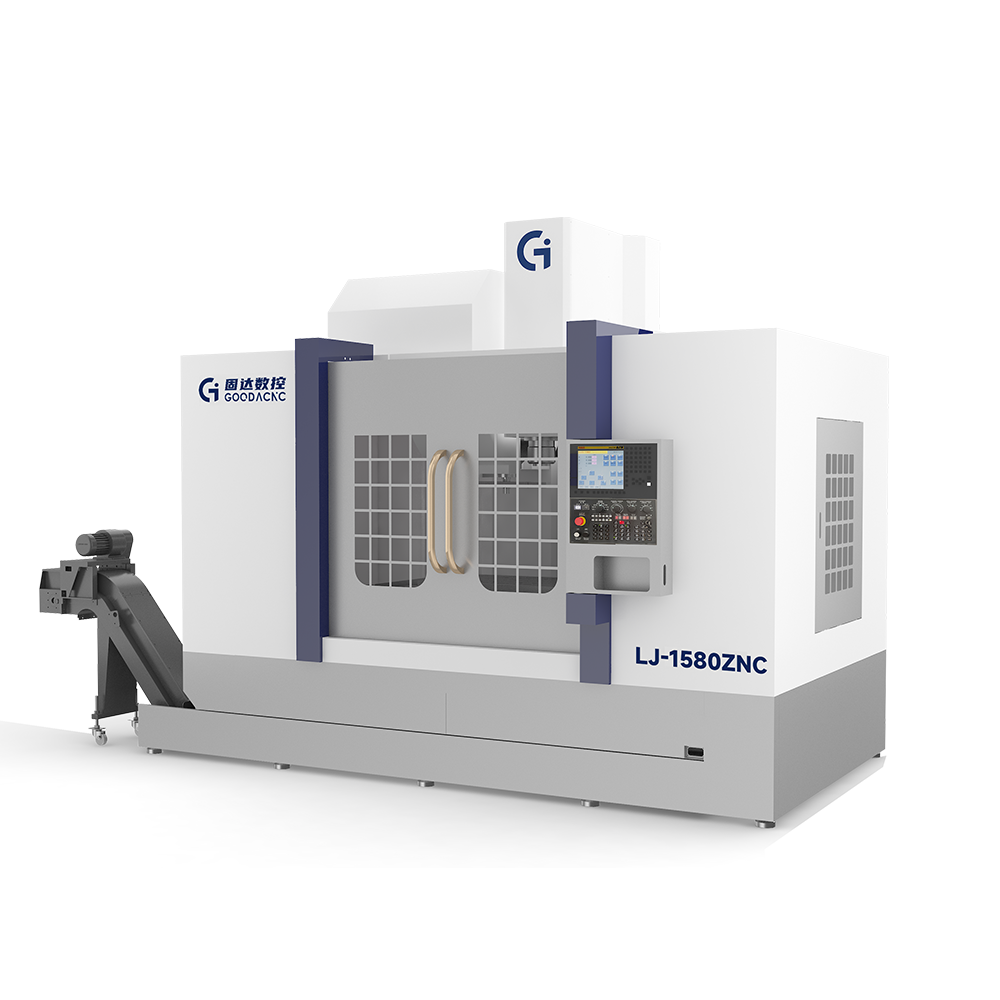
The hardware layer of a CNC controller functions as the primary regulator of mechanical harmony, utilizing high-speed fiber optic cables for noise-free signal transmission. These systems process axis movement commands at sub-micron levels, which is necessary when navigating the complex tool paths required in medical or aerospace part production. This rapid data exchange ensures that the servo drives react within milliseconds to any deviation in the programmed coordinate system.
Reliable data flow between the encoder and the drive allows the vertical machining center to maintain tight tolerances during 24-hour production cycles. In a 2024 industrial survey of 150 machine shops, those using high-speed bus communication reported a 12% improvement in surface finish quality ($Ra$ values). Such communication speeds allow for the synchronization of the spindle speed with the feed rate, preventing the tool chatter that often ruins expensive workpieces.
"High-speed CNC communication protocols like EtherCAT or MECHATROLINK-III facilitate real-time synchronization between the spindle and the 3-axis motion, reducing geometric errors in circular interpolation to under 3 microns."
Consistent geometric accuracy leads to the next layer of enhancement, which involves the software-based compensation for physical machine limitations like thermal expansion. Cast iron frames and ball screws naturally expand as the friction of a 12,000 RPM spindle generates heat over several hours of continuous operation. CNC systems use a grid of thermal sensors to calculate this growth and automatically shift the work offset in the Z-axis to compensate.
Experimental data from 2025 showed that machines equipped with active thermal compensation maintained a Z-axis drift of less than 8 microns over an 8-hour shift. Without this digital correction, the same vertical machining center would typically see a drift of 35 microns or more as the ambient shop temperature rises by 5°C. This level of autonomous adjustment removes the need for operators to pause production for manual probing and offset updates.
-
Thermal Drift Compensation: Real-time Z-axis adjustment based on spindle temperature.
-
Pitch Error Correction: Digital mapping of ball screw inaccuracies every 10mm of travel.
-
Backlash Compensation: Automatic take-up of mechanical play when reversing axis direction.
Digital mapping leads to superior tool path optimization, where "Look-Ahead" algorithms analyze the upcoming geometry of the G-code file. By calculating the deceleration needed for sharp corners or tight radii hundreds of blocks in advance, the system prevents the mechanical "jerk" that causes gouging. In 2023, high-performance controllers demonstrated the ability to process 2,500 blocks per second, allowing feed rates to stay near 30 meters per minute without overshooting the target.
"Look-ahead functionality acts as a predictive buffer, ensuring the machine never exceeds its physical acceleration limits while maintaining the maximum possible programmed feed rate."
Predictive motion control is further enhanced by adaptive feed rate technology, which monitors the actual load on the spindle motor during the cutting process. If the system detects a 15% increase in torque due to a variations in material hardness, it automatically scales back the feed rate to protect the tool. This prevents the catastrophic tool failure that often occurs when a machine blindly follows a static program without sensing the environment.
| Performance Metric | Standard CNC (2020) | Advanced CNC (2026) |
| Block Processing Speed | 0.5 ms | 0.1 ms |
| Look-Ahead Buffer | 500 Blocks | 2,000+ Blocks |
| Tool Change Time (T-T) | 2.5 Seconds | 1.2 Seconds |
| Spindle Uptime Efficiency | 82% | 95% |
Higher uptime is also achieved through advanced tool management systems that track the cumulative cutting time of every insert in the magazine. Once a tool reaches 90% of its predicted life based on sample sets of 500 test cycles, the CNC system flags it for replacement or selects a sister tool. This proactive management reduces the scrap rate by 7% by ensuring that no worn tool is used for a finishing pass.
"Automated tool life tracking uses historical wear data to predict failure points, allowing for uninterrupted lights-out manufacturing and higher overall equipment effectiveness (OEE)."
Data-driven tool management naturally integrates with modern connectivity protocols that turn the machining center into a part of a larger digital ecosystem. Systems supporting MTConnect or OPC UA allow for the remote monitoring of machine status, fluid levels, and power consumption from any device. In a recent case study of 40 manufacturing plants, the transition to IoT-enabled CNC monitoring resulted in a 20% reduction in energy costs through better idle-time management.
This connectivity ensures that every vertical machining center remains productive by alerting maintenance teams before a minor issue causes a total machine shutdown. For example, the CNC can monitor the vibration frequency of the spindle bearings and detect an abnormal spike in the 500Hz range. Identifying these patterns early allows for scheduled maintenance during off-shifts, avoiding the 15-hour average downtime associated with unexpected spindle failure.
Effective vibration monitoring requires the CNC to have a high sampling rate for its internal sensors to distinguish between normal cutting forces and bearing fatigue. Modern controllers now sample these inputs at 2kHz, providing a granular view of the machine’s health that was previously impossible. This high-resolution data allows the system to fine-tune the jerk control settings, which further protects the mechanical components from premature wear.
"High-frequency vibration analysis integrated into the CNC kernel allows for the detection of spindle imbalance at an early stage, extending bearing life by up to 40%."
Refined mechanical protection translates to the ability to handle more complex, multi-axis operations with higher confidence in the final output. The addition of a 4th or 5th axis is managed entirely by the CNC's kinematic transformation software, which handles the complex math required to keep the tool tip at a specific point. Without this specialized software, the operator would struggle to maintain the $\pm0.015mm$ tolerance required for high-precision impellers or turbine blades.
Managing these multi-axis movements requires significant computational power to ensure all axes reach their destination simultaneously without lag. Modern CNC kernels utilize multi-core processing to separate the user interface tasks from the real-time motion control tasks. This separation ensures that the machine's movement is never interrupted by the loading of a large file or the adjustment of an on-screen setting.