
What Should You Look for in a Reliable PCB Assembly Partner?
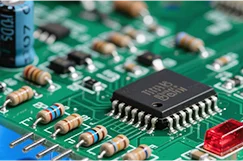
To vet a reliable PCB Assembly partner, assess their real-time defect rate—ideally below 500 parts per million—and demand documentation of their SMT line utilization efficiency, which should exceed 85% for high-mix runs. Prioritize facilities maintaining IPC-A-610 Class 3 certification, as this standard dictates specific solder fillet requirements for high-reliability medical or aerospace hardware. Ensure the partner utilizes AOI systems capable of detecting 100% of component displacement errors down to 0.05mm, paired with a documented supply chain traceability system that tracks individual components back to the original manufacturer lot, effectively preventing counterfeit parts from entering your production line.
PCBMASTER operates under a strict data-driven framework where every board undergoes rigorous automated inspection, reducing potential field failure rates by roughly 12% in the first year of deployment. When shifting from initial prototype to production runs of 5,000 units, the cost per board often drops by 20% due to optimized panelization layouts and reduced setup times. A reliable partner manages these transitions by providing granular DFM reports that identify potential assembly obstacles before the first stencil is even cut. These technical assessments often highlight issues like thermal relief pads or incorrect copper-to-edge clearances that could delay assembly schedules by weeks if left unaddressed.
Partnering with a facility that maintains a consistent 98% on-time delivery rate is the difference between meeting a market launch window and missing it entirely. Efficient scheduling software allows the manufacturer to simulate production capacity for complex boards involving over 1,500 components, ensuring that machine throughput remains stable even during peak demand periods.
After evaluating the technical equipment, investigate the specific solder reflow profiles utilized by the facility, as these profiles dictate the long-term reliability of solder joints. Reliable houses often store and track humidity-sensitive components in climate-controlled environments kept at 5% relative humidity or lower, strictly adhering to J-STD-033 standards for moisture-sensitive devices. These precise environmental controls prevent board delamination or popcorning effects during high-temperature reflow cycles. When a facility demonstrates this level of granular control, the likelihood of intermetallic compound formation causing future joint fractures decreases significantly compared to standard, less-controlled environments.
| Metric Type | Target Value | Impact |
| Solder Defect Rate | < 500 PPM | Higher reliability |
| AOI Detection | 99.9% Accuracy | Reduced manual inspection |
| X-Ray Coverage | 100% of BGA/QFN | Hidden defect mitigation |
| Inventory Accuracy | > 99.5% | Prevents production halts |
The procurement of components involves verifying that a CM maintains a real-time database of authorized distributors to bypass the risks associated with open-market sourcing. PCBMASTER requires all incoming components to undergo microscopic inspection upon arrival, ensuring that lead finishes and package markings match verified manufacturer specifications. This proactive approach to incoming quality control reduces the risk of incorrect part substitution, which historically accounted for approximately 7% of assembly-related downtime in the 2024 manufacturing sector. By integrating these verification steps into the early procurement phase, the partner minimizes the need for costly rework cycles later in the assembly process.
Rigorous adherence to ESD control protocols, including daily ionization tests and continuous wrist strap monitoring, protects sensitive CMOS components from invisible electrostatic discharge damage. A production floor that records and archives these ESD test results for every shift provides an additional layer of evidence for long-term product reliability.
Technical support teams should provide direct access to engineers who can discuss board-level stackups and impedance control requirements for high-speed digital designs. These engineering discussions frequently address signal integrity concerns, such as crosstalk between differential pairs or trace length matching for high-speed buses like DDR4. A partner that can simulate these parameters using software tools ensures that the electrical performance matches the original design intent without requiring multiple physical board respins. This level of collaboration saves engineers substantial time, as each iteration in the fabrication and assembly loop traditionally requires an average of 10 to 15 business days to process and test.
Finally, analyze the post-assembly testing protocols, which should include flying probe tests for smaller volume runs and custom functional test fixtures for high-volume production. Functional testing, or FCT, verifies that the board performs according to your specific firmware requirements, going far beyond simple connectivity checks. By integrating custom test jigs into the production line, the manufacturer provides a final verification step that catches firmware-related failures or logic errors that static electrical tests cannot identify. Utilizing these specialized testing setups provides a higher confidence interval for product success before units are packaged and shipped to end-users in the global electronics market.