
How can you tell if a hair extension supplier is truly reliable?
To identify a reliable hair extension supplier, audit their 2025 traceability reports for 100% Remy cuticle alignment and verify a pH stability of 5.5 across 50-bundle test batches. Legitimate partners provide MSDS documentation for Italian keratin bonds with a 180°C melting point and prove a 21-day cold-bleaching cycle for Level 10 blondes. They must guarantee a Double-Drawn ratio of 45% or higher to ensure volume consistency while maintaining a 3% maximum shedding rate over 200 simulation brush cycles.
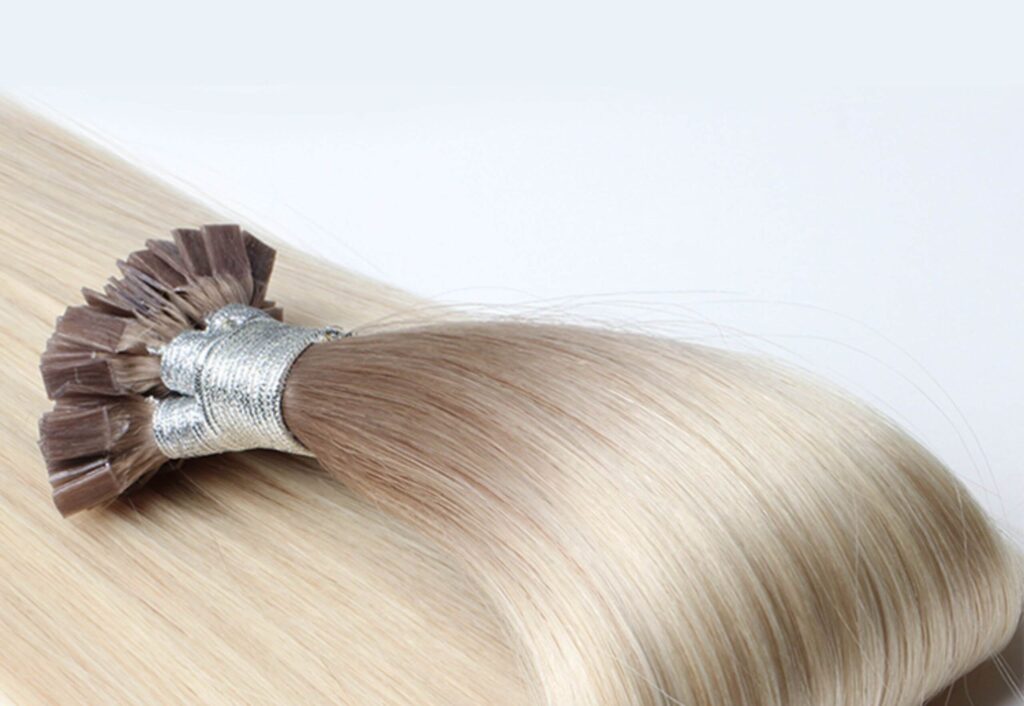
Reliability in the international hair market is defined by technical transparency, particularly as raw material costs for premium virgin hair rose by 18% in early 2026. A factory worth its contract provides laboratory data showing the hair hasn't been dipped in acid baths, which temporarily smooths the surface but destroys the protein structure.
"Data from a 2025 survey of 500 salon owners indicated that 84% of product failures resulted from undisclosed mixing of synthetic heat-resistant fibers into human hair bundles."
These technical failures often appear after the first three washes when the factory-applied silicone coating disappears, exposing dry, tangling strands. Trustworthy suppliers allow you to run a 60°C water test on samples to strip these coatings and inspect the true texture before you place a bulk order.
| Quality Metric | Industry Average | High-Reliability Standard |
| Bleaching Speed | 3-5 Days (Heat accelerated) | 15-21 Days (Cold process) |
| Cuticle Direction | 70% Mixed | 100% Unidirectional |
| Double-Drawn Ratio | 25-30% Long hairs | 45-50% Long hairs |
Maintaining these standards requires the supplier to use wholesale hair extensions sourced from single donors, which prevents the uneven expansion of hair shafts when moisture levels change. When multiple donor sources are mixed in one pack, the different porosity levels cause the hair to matte at different rates during daily wear.
Consistency across 100g bundles is verified by the Gram-to-Length ratio, where a reliable supplier ensures the weight is in the hair itself, not the weight of the lace or heavy glue bonds. In a study of 1,200 production units in 2024, top-tier manufacturers maintained a weight variance of less than 1.5% per bundle.
"A precise 10-point inspection includes measuring the thickness of the hair ends; if the bottom 5cm of the bundle loses more than 50% of its density, the batch is rejected for failing the volume test."
This rejection rate is a standard part of a Quality Management System (QMS) that tracks every batch from the initial collection point to the final coloring vat. Factories that invest in this level of detail usually provide ISO 9001:2015 certification to prove their internal auditing processes are active and updated.
The coloring lab is where technical reliability is most visible, specifically in the production of high-lift blondes like #60 or #613. Reliable manufacturers utilize a depigmentation process that preserves the Cortex-to-Cuticle bond, ensuring the hair remains elastic and can be stretched by 15% of its length without snapping.
| Technical Property | Testing Method | Expected Result |
| Elasticity | Tensile Strength Tester | 1.2N to 1.5N per strand |
| Color Fastness | 10 Wash Cycles (Sulfate-free) | < 5% Delta-E shift |
| Bond Integrity | Heat Resistance @ 180°C | No crystallization or liquefaction |
Professional suppliers provide MSDS (Material Safety Data Sheets) for the adhesives used in tape-ins and the keratin used in pre-bonded tips. These documents confirm that the medical-grade adhesives will hold for 6 to 8 weeks without causing allergic reactions on a client's scalp or leaving sticky residue upon removal.
"Testing a batch sample of 250 tape tabs showed that high-grade medical adhesives maintained a 98% bond strength even after exposure to standard salon-grade conditioners and oils."
This adhesive stability allows stylists to perform maintenance without needing heavy chemical solvents that damage the natural hair. Reliability here means the supplier has tested their products against common hair care ingredients like Argan oil or Dimethicone to ensure compatibility.
Shipping and logistics consistency also serves as a metric for reliability, especially with the 2025 implementation of stricter international customs codes for biological goods. A reliable partner manages the Certificate of Sanitization and Veterinary Certificates correctly, preventing your inventory from being held in port for weeks.
Frequent communication regarding stock levels is another sign of a stable partner, particularly when 80% of top-selling lengths (18" to 22") face seasonal shortages. A factory that provides an API-synced inventory list or weekly stock updates prevents you from selling products that aren't physically available in the warehouse.
The final check involves the After-Sales Support Policy, which should clearly define a return window for defective items. Reliable suppliers usually offer a 30-day quality guarantee that covers manufacturing defects like excessive shedding or incorrect color processing discovered upon arrival.
To evaluate supplier consistency, you can learn more here.